
Vacation vs Holiday: Why Americans “Vacation” While Everyone Else Takes a “Holiday”
Ever wonder why Americans say “vacation” and British say “holiday”? Learn what a vacation actually is, where the word came from, how other countries use “holiday,” and why it all ties into work culture and mental health.
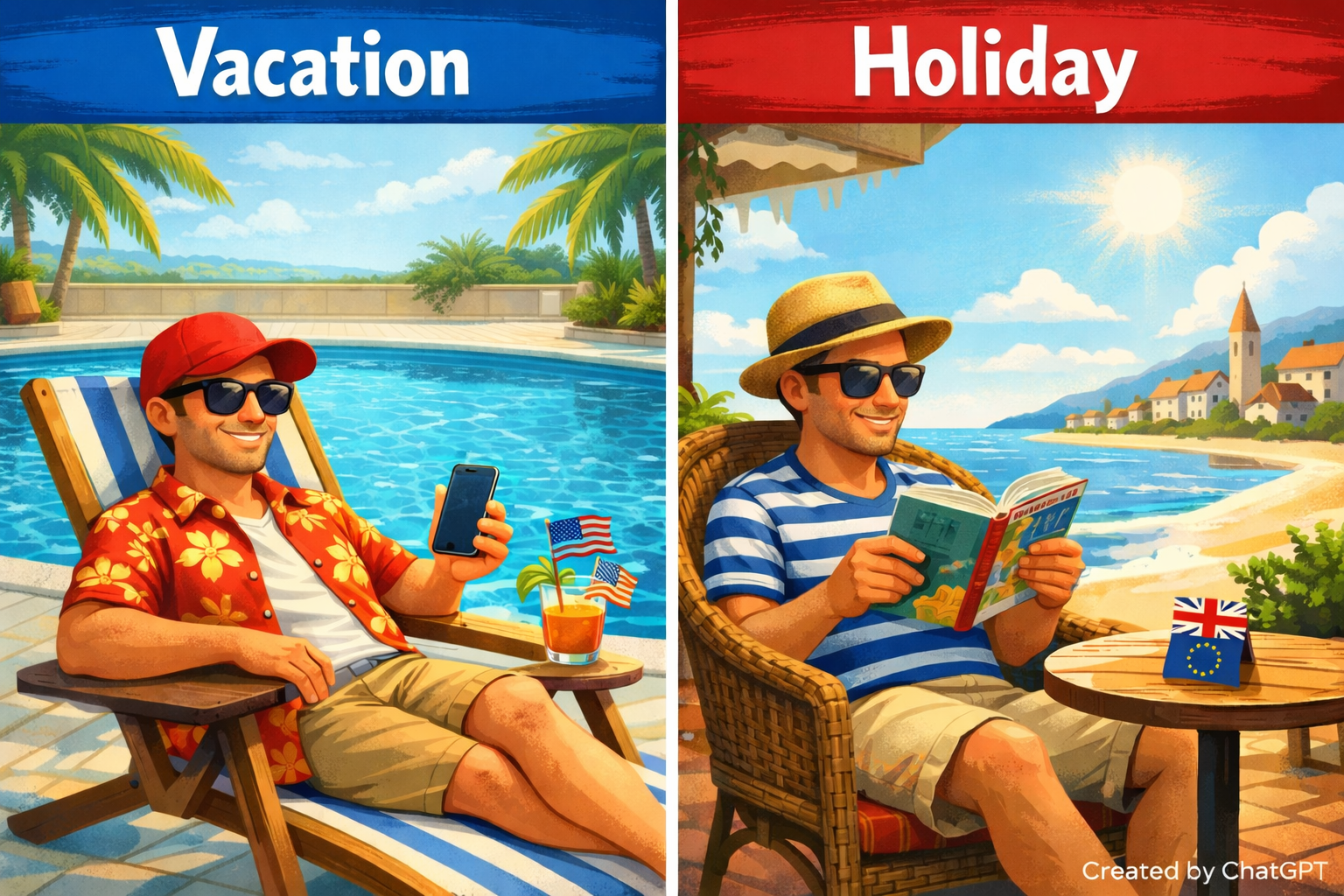
Vacation vs Holiday: Why Americans “Vacation” While Everyone Else Takes a “Holiday”
If you’ve ever heard an American say “I’m on vacation” and someone from literally anywhere else say “I’m on holiday,” you’ve probably wondered: are we talking about the same thing or is one of them just permanently at Christmas?
Spoiler: it is the same thing… mostly. But the words we use say a lot about how we see rest, work, and what time off is for. And yes, the history is way nerdier than you’d expect.
Let’s break it down: what is a vacation, why Americans call it that, why other countries swear by “holiday,” and what all this has to do with how much time off people actually take.
1. So… What Is a Vacation?
At its core, a vacation is just time when you’re not working or studying—and ideally not spiraling over your inbox, either. In American English, “vacation” usually means:
Time off from work or school
Often involving travel (but not always)
Used for rest, fun, or pretending you’re the kind of person who regularly hikes at sunrise
Merriam-Webster traces the word vacation back to Latin vacatio, meaning “exemption from service” or “respite from work,” which already sounds pretty nice. The root verb vacare literally means “to be empty, free, or at leisure.” Empty calendar? Free from meetings? That’s the dream.
Originally, in English, “vacation” referred to breaks for schools, courts, and clergy—basically when institutions shut down for a season. It wasn’t until the 19th century that Americans started using “vacation” the way we do now: as an extended break away from home, often to travel.
So if you’re taking a week off to sit on a beach rethinking your life choices? That’s vacation, by both definition and spirit.
2. Why Do Americans Call It a “Vacation”?
Americans didn’t just randomly pick a new word because “holiday” was taken. There’s history here.
In the 1800s, wealthy New Yorkers—think Vanderbilts and Rockefellers—started “vacating” their city homes for long stretches in the Adirondacks and other summer retreats. They literally vacated one residence for another, and that language stuck. Guidebook author William H. H. Murray helped popularize the idea of the American “vacation” as a specific kind of trip away from normal life.
Meanwhile, legal and academic institutions in the U.S. were already using “vacation” to describe breaks between terms or sessions. By 1878, “vacation” was firmly established in American English as the equivalent of what British speakers meant by “holiday.”
In modern American English:
Holiday = a specific calendar day like Christmas, Thanksgiving, July 4th.
Vacation = your personal time off, usually when you travel or rest.
Ask an American, “Are you going on holiday?” and they’ll assume you mean “for Christmas,” not “to Mexico.” Ask if they’re going on vacation, and now we’re talking a road trip or plane tickets and PTO.
3. Why Do Other Countries Call It a “Holiday”?
Outside the U.S., especially in the U.K. and much of the Commonwealth, holiday pulls double duty.
In British English:
Holiday = public/bank holiday and your personal time off.
People say “I’m on holiday for two weeks,” not “on vacation.”
As language teachers explain, Brits use “holiday” for any time off, whether it’s a public holiday or a week in Spain. Americans and Brits both say “tomorrow is a holiday” to mean a public day off—but only Brits also say, “We’re going on holiday next month.”
The word holiday itself originally meant a holy day—religious festivals or days exempt from labor. Over time, it expanded to just mean a day or period of exemption from work, usually associated with celebration or rest.
So when other countries say “holiday,” they’re tapping into that older idea: a day—or days—set apart from ordinary work, often as part of a shared cultural rhythm. In a lot of Europe, that rhythm includes way more time off than Americans get.
4. Vacation vs Holiday Culture: Who Actually Gets More Time Off?
This is where it gets juicy. The words are different—but so are the policies behind them.
The U.S. is famously bad at guaranteed time off. There is no federal law requiring paid vacation days. Your PTO is basically vibes and whatever your HR department negotiated. Compare that with Europe:
France, Austria, and many EU countries guarantee at least 4–5 weeks of paid vacation per year, by law.
The U.K. mandates 28 days of paid leave, including public holidays.
Some countries, like Austria, offer a total of 43 paid days off per year when you combine annual leave and public holidays.
Meanwhile, many American workers average around 10–12 paid vacation days a year, and more than half don’t use them all, according to Expedia survey data. So not only do Americans use the word “vacation” instead of “holiday”… they actually take fewer of them.
In other words: Americans say “vacation,” Europeans live “holiday.”
5. Does the Word We Use Change How We See Time Off?
Kind of, yeah. Language reflects culture—and shapes it.
In the U.S., “vacation” often sounds like a personal luxury item: something you “earn,” “save up,” or sometimes feel guilty about. It can feel optional, even indulgent. That tracks with a work culture that equates busyness with value and often glorifies not taking time off.
In many other countries, “holiday” carries a more collective feel—shared public holidays, long summer breaks everyone expects, entire industries slowing down together. When the norm is “everyone’s off,” there’s less guilt in stepping away.
Data backs this up:
A 2024 report found the U.S. ranks dead last among advanced economies for guaranteed paid time off, while European countries mandate weeks of leave.
Deel’s 2024 analysis showed that under flexible or unlimited leave policies, European workers actually take more time off, while in North America leave days barely changed—aka “no vacation region.”
So the vocabulary isn’t just quirky—it lines up with real differences in how societies build rest into life.
6. Okay, But Practically: What Should You Call It?
If you’re:
In the U.S. → Say “vacation” when you mean your personal time off (“I’m on vacation next week”) and “holiday” for specific dates (“Thanksgiving is a holiday”).
In the U.K. or Commonwealth → “Holiday” does it all (“We’re going on holiday in June”).
Writing for a mixed audience → “Time off” or “paid leave” keeps it neutral and HR-friendly.
The more important question isn’t what you call it—but whether you actually take it.
7. Why Any of This Matters (Beyond Winning Trivia Night)
Understanding the vacation vs holiday difference isn’t just linguistics geekery; it’s a reminder that:
Some cultures bake rest into the system (holidays as expectation).
Others push rest off as a personal responsibility (vacation as a choice you must “justify”).
The U.S. model tends to feed burnout, while countries with strong holiday cultures often report better work–life balance and more consistent mental health outcomes.
So the real flex isn’t saying the “right” word—it’s using whatever time off you have, full stop.
Call it a vacation. Call it a holiday. Just don’t call it “someday” for another five years.
And if you need a sign to put in that PTO request? This is it.
For media inquiries, guest contributions, or editorial partnerships, contact editor@vacays.life.
Image created by ChatGPT
Rest well. Travel intentionally.
Collaborate
For thoughtful partnerships aligned with rest, travel, and well-being. Let’s connect →


Privacy Policy | Terms of Service
© 2026 Vacays